Order Tracking
Designing self-service order tracking
Overview
RHINOSHIELD's made-to-order fulfillment process involved multiple manufacturing, packaging and shipping stages. While those checkpoints were useful internally, customers had little visibility into what was happening after placing an order.
As a result, Customer Service regularly received repetitive questions about order status and delivery progress.
I worked with the PM and the Dev team to design RHINOSHIELD's first customer-facing order-tracking experience, translating a complex internal workflow into a smaller set of meaningful statuses customers could understand and check on their own.
Role
UX Designer
Team
PM of 3 / UX Designer / Customer Service Team / Front-end of 2 / Back-end of 4
Timeline
Feb. - May. 2024 (~16 weeks)
Stakeholders
Customer Service Team / Website customers
Scope
Order tracking across 10 RHINOSHIELD website
Goal
Reduce repetitive order-status inquiries through self-service
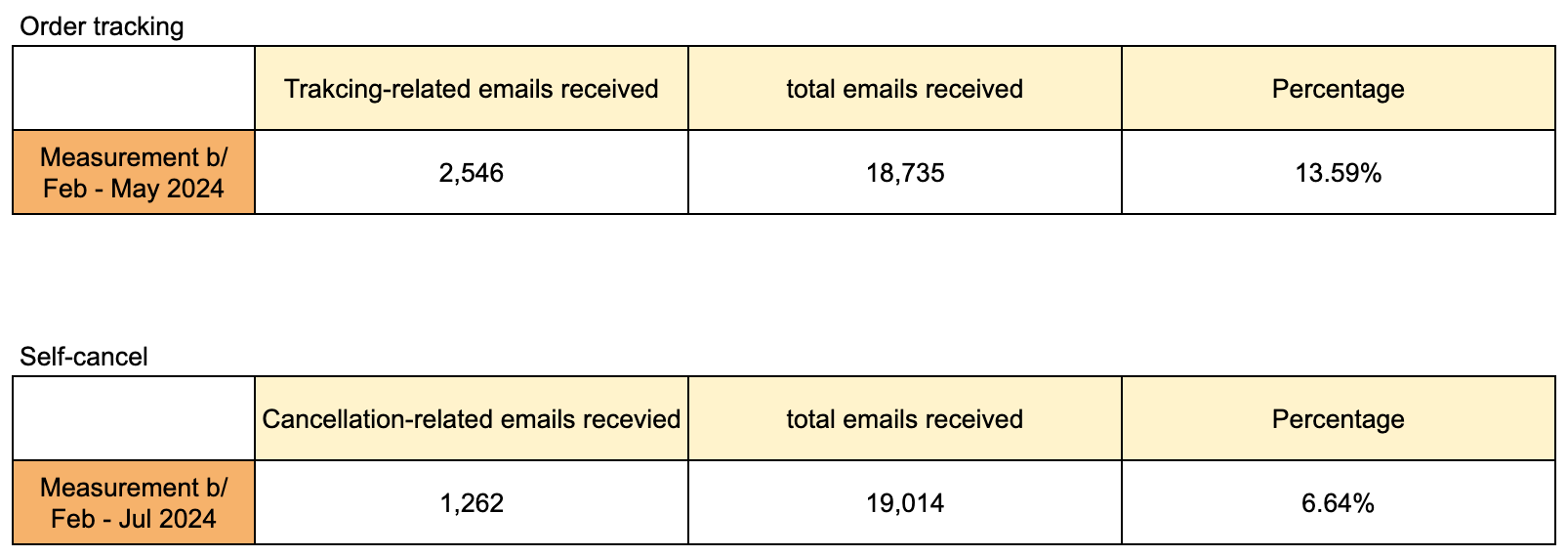
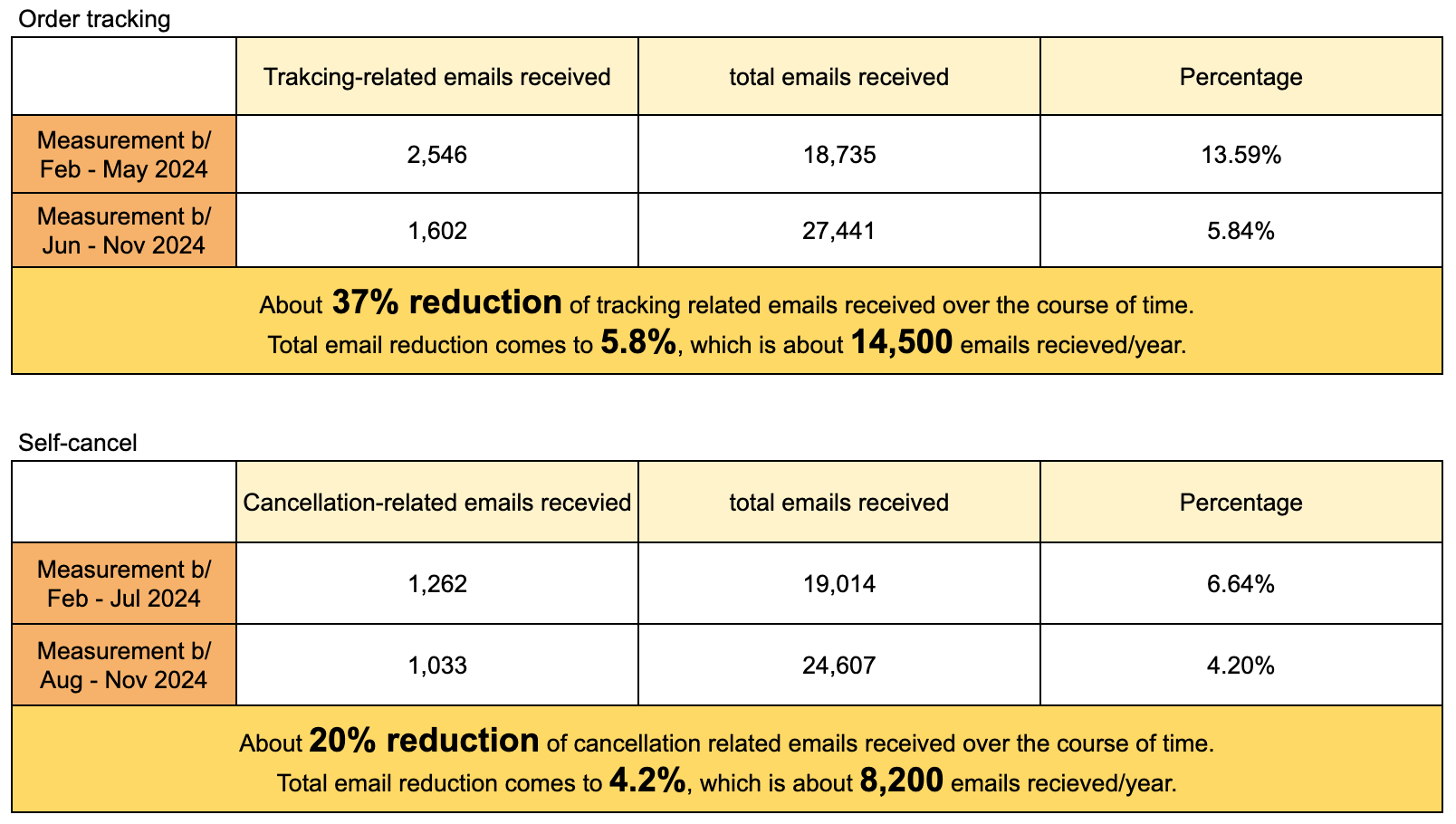
Order tracking and order cancellation emails account for ~20% of the emails we received on daily average
01—A visibility problem was becoming a support problem
One of RHINOSHIELD's goals in 2024 was to reduce the workload of the Customer Service team.
When we reviewed incoming support request, order tracking and order cancellation stood out as recurring topics. Customer were contacting Customer Service for information that already existed somewhere inside RHINOSHIELD's operational systems, but was not available to them directly.
The existing journey looked like this:
Customer asks for an update
Customer Service checks internal systems
Customer Service explains the status
Customer waits for the response
For repetitive questions such as "Where is my order?" this created unnecessary work on both sides.
02—The Design Challenge
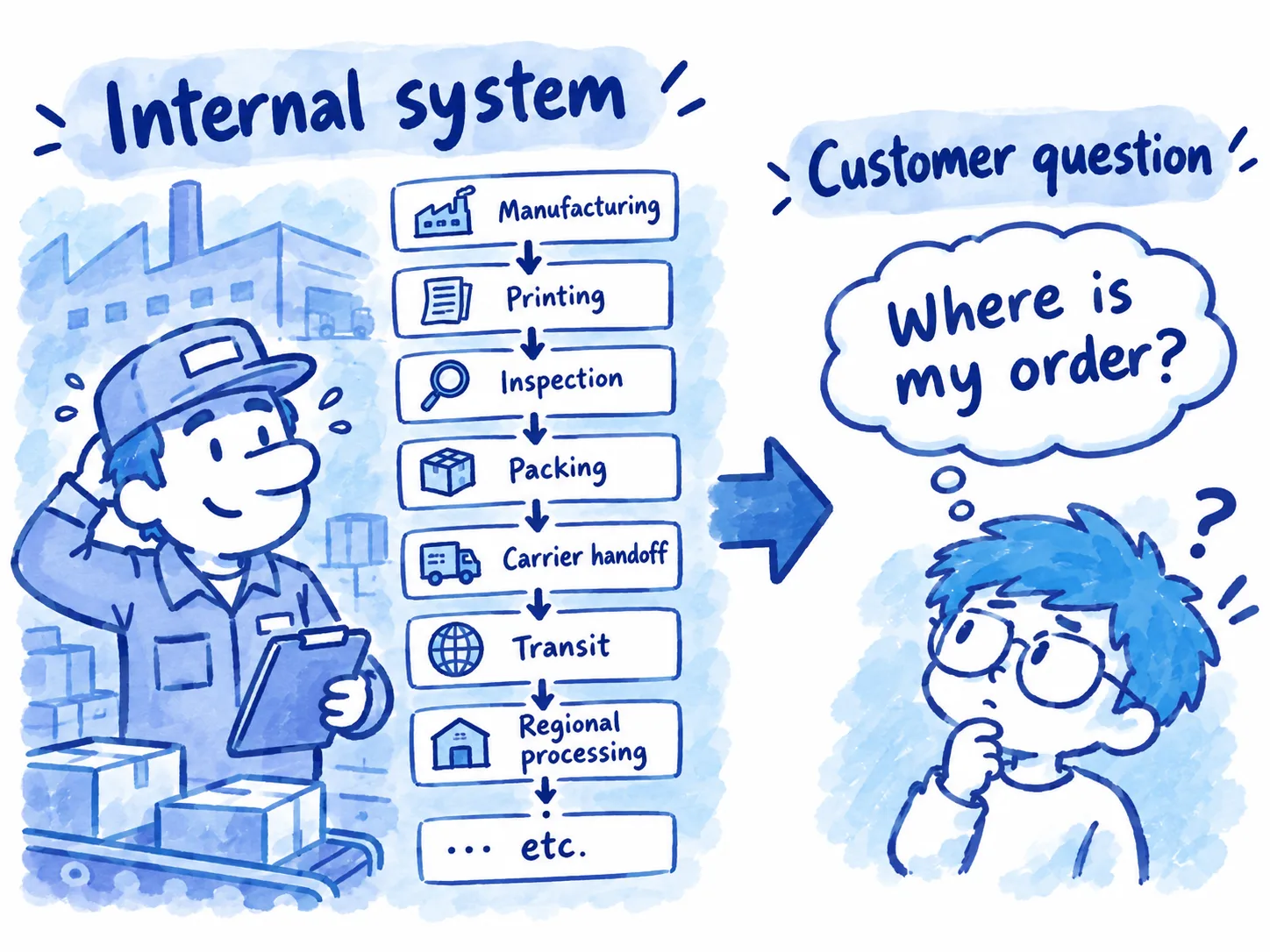
The obvious solution was to expose order status directly to customers, but the difficult part was deciding what status actually meant.
RHINOSHIELD's fulfillment workflow contained many internal checkpoints related to manufacturing, printing, packing, shipping and delivery. Those states were useful for operations, but simply exposing all of them would transfer the complexity of the internal process to the customer.
Thus, the design challenge became:
How might we give customers enough visibility to understand their order without asking them to understand our fulfillment system?
03—One tracking experience had to work across different fulfillment scenarios
There were three major constraints:
Internal process complexity
RHINSHIELD's fulfillment process included many possible checkpoints depending on product type, printing process, packaging, and shipping route
Not every order followed exactly the same sequence
Delivery uncertainty
Overseas shipping could vary significantly depending on destination and carrier. Delivery times could sometimes differ by days or even weeks
We needed to communicate progress without creating delivery expectations the system could not reliably guarantee
Mobile-first usage
Most customers accessed RHINOSHIELD through mobile devices, so the tracking experience needed to remain understandable within a narrow viewport.
04—Before simplifying the experience, we had to understand the system.
The first step was not designing a progress bar. But it was understanding all the ways an order could move through RHINOSHIELD's fulfillment process.
Working with the PM and Dev team, we mapped out possible order scenarios and documented the checkpoints that could occur across different system and shipping conditions.
The initial mapping contained far more detailed than a customer would ever need. But that detail was necessary before we could decide what to remove.
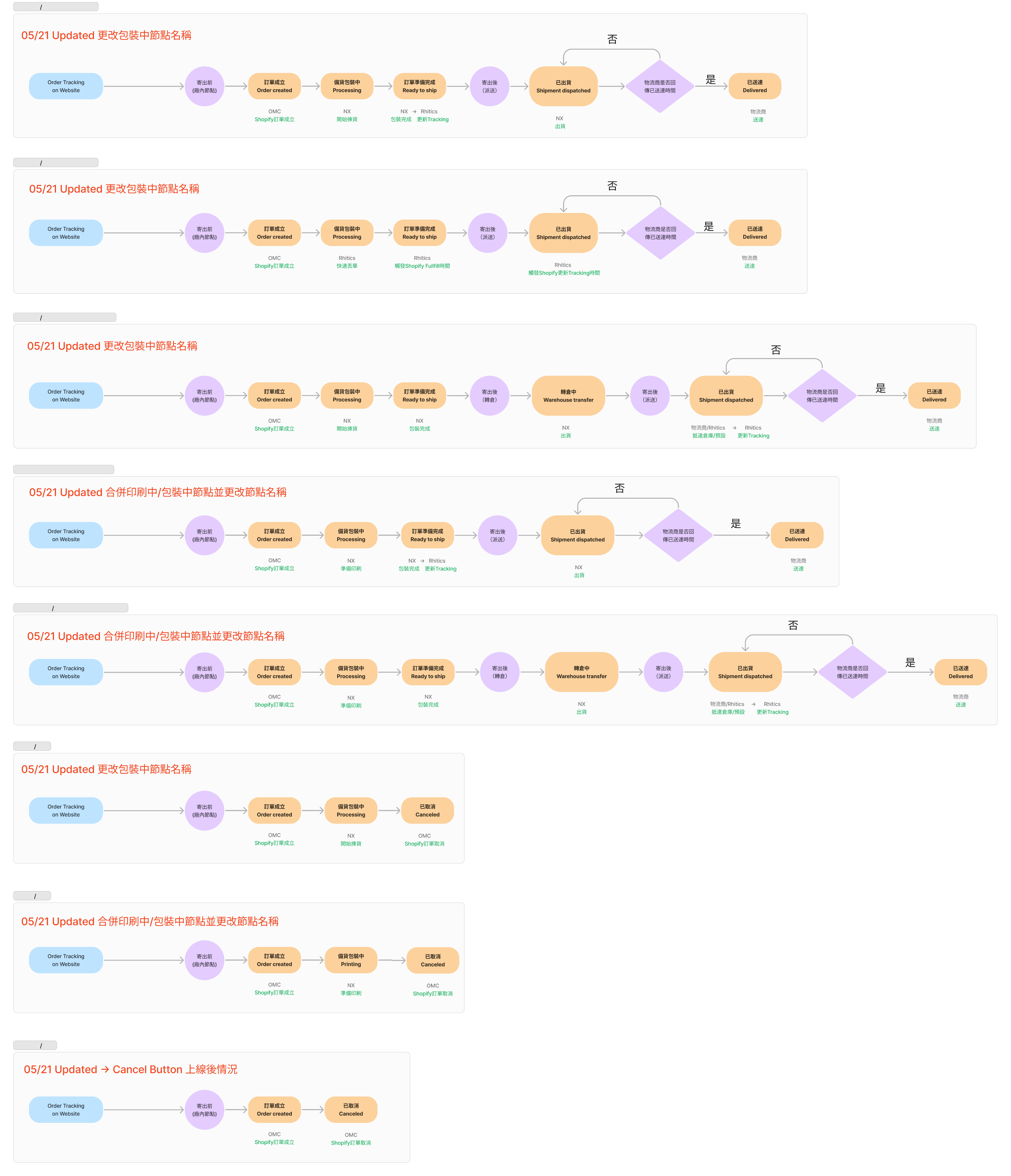
Scenario listing
05—Finding the Customer Mental Model
Once the internal process was mapped, the next questoin was:
Which changes actually matter to the customer?
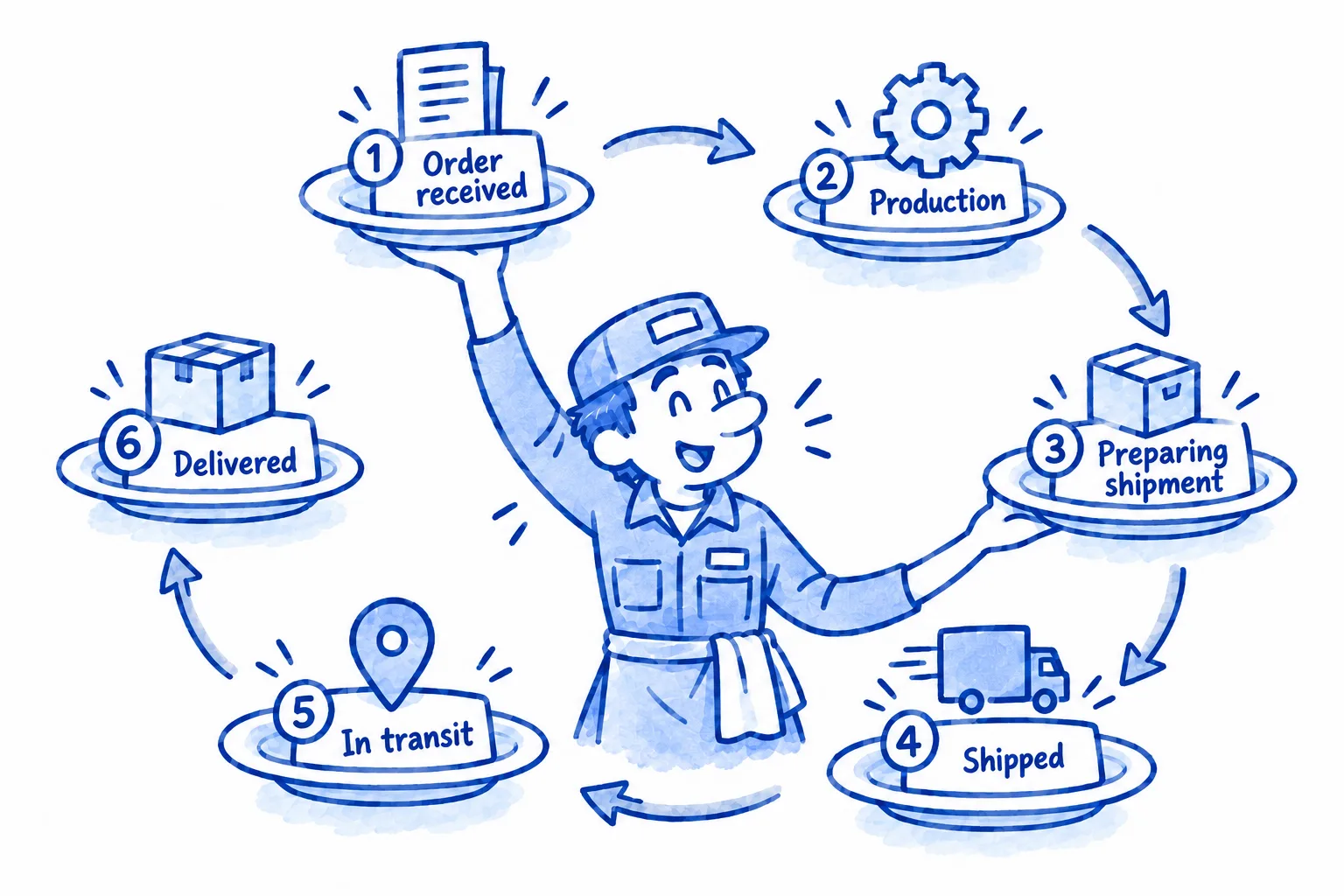
Rather than mirroring every operational state, we grouped related activities into broader stages that reflected the questions customers were likely to have. The result was a set of six customer-facing checkpoints that could represent the majority of fulfillment scenarios. Although the exact internal activity could vary underneath, the customer still received a consistent explanation of progress.
We did not need to expose the system as it existed. A translation into the level of detail was what the customers actually needed.
06—A useful estimate did not have to be an exact date
International shipping times could vary on destination, carrier, customs and other logistics conditions. This meant we could not reliably tell customers that their package would arrive on one specific day.
But removing delivery estimates altogether would leave customers with the same uncertainty that contributed to tracking inquiries in the first place.
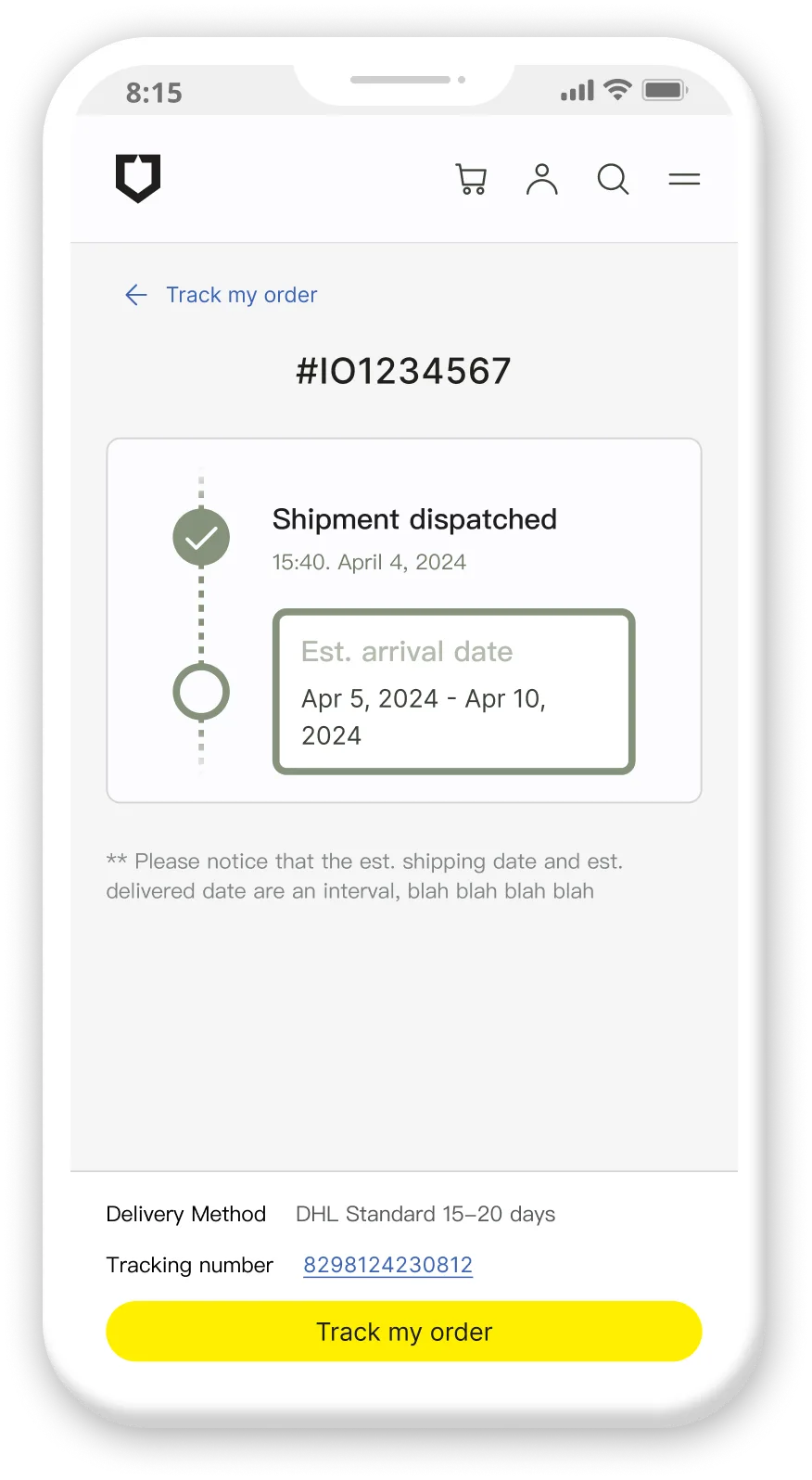
Instead, we communicated delivery as a timeframe.
Estimated arrival date: May 10-13
The range gave the fulfillment process enough flexibility to account for normal shipping variation while still giving customers a useful expectation of when their order might arrive.
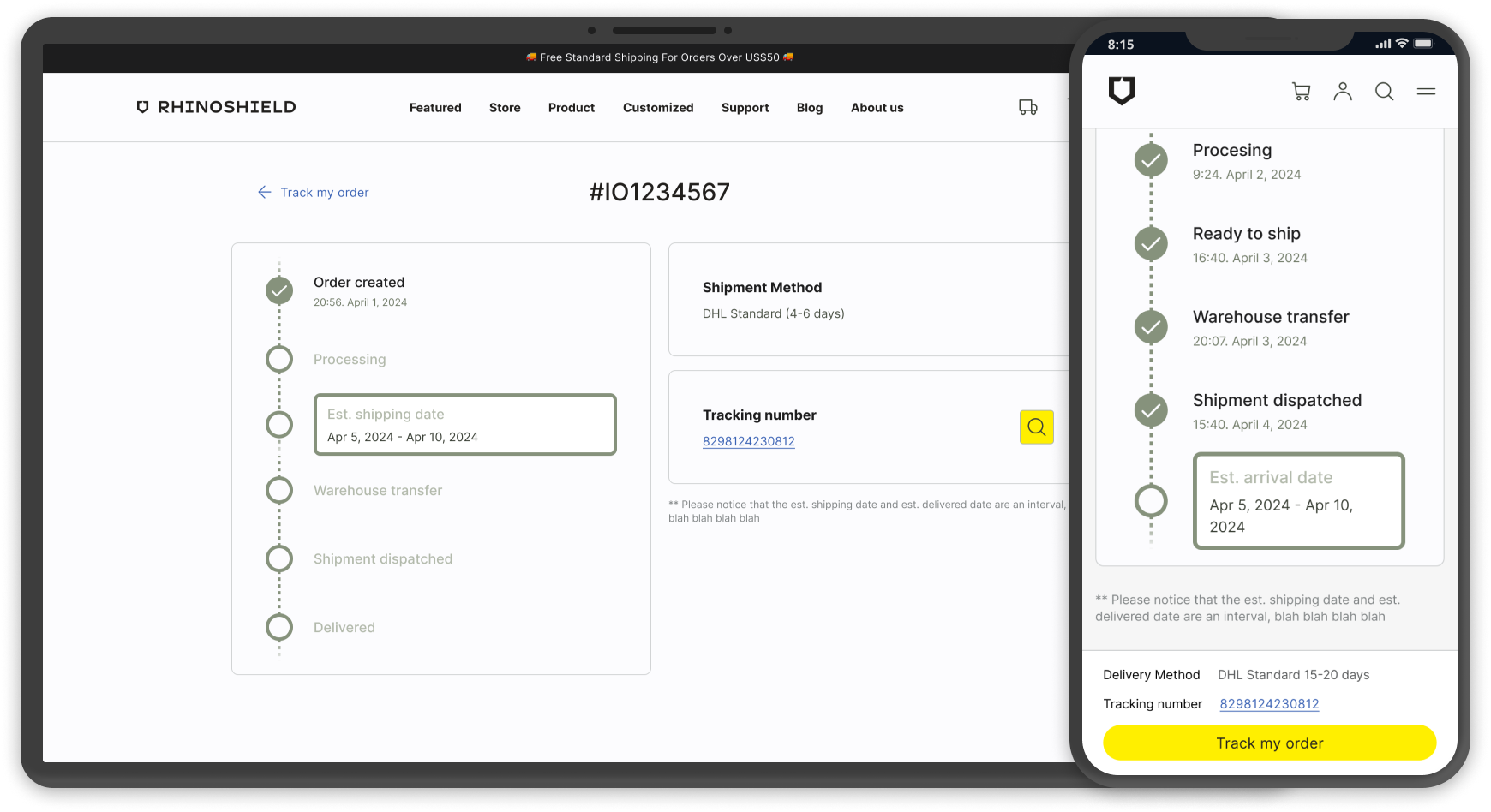
Comparison of desktop and mobile version
07—Designing the tracking experience
The tracking experience was structured around the questions customers were most likely to have:
Where is my order?
Make the current stage immediately visible
What has already happened?
Show completed checkpoints su users understand the progress that has already been made
What happens next?
Use the remaining checkpoints to provide context without requiring users to understand the underlying operational process
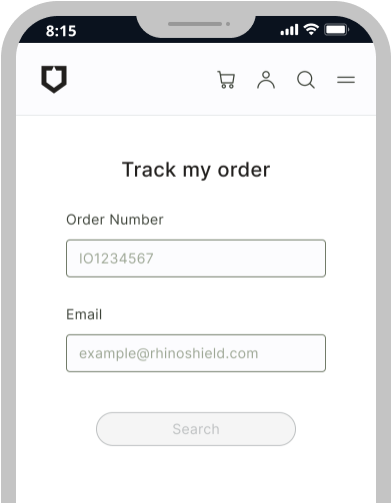
An entrance for customers with no account
08—Self-service should not depend on membership
RHINOSHIELD also allowed customers to purchase without creating an account.
If tracking were only available to logged-in members, guest customers still need to contact Customer Service for the same information.
We therefore included a separate lookup path where customers could retrieve their order using identifying information such as their oder number and email address.
This allowed the tracking experience to support both account holders and guest customers.
09—Turning status into Action
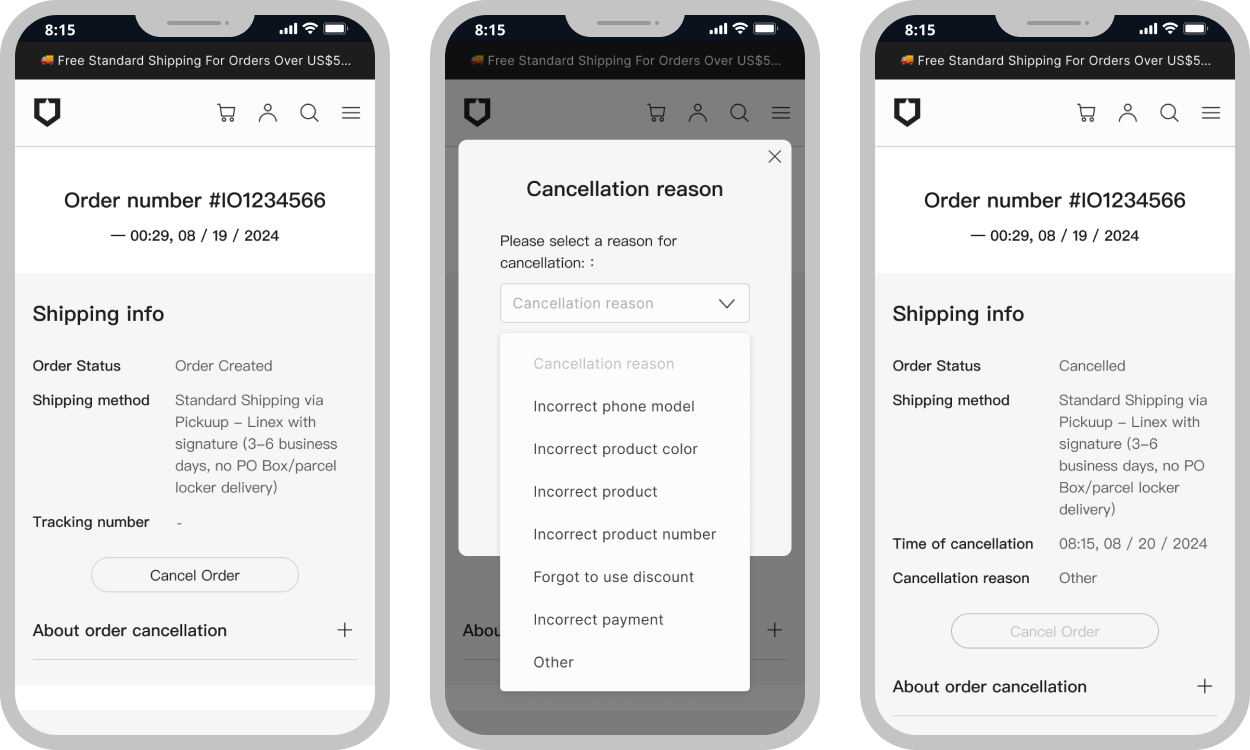
Before this project, customers who noticed a mistake after placing an order had to contact Customer Service to cancel or modify it. A common request was changing an item after selecting the wrong color. This created another repetitive support workflow.
Since we established a reliable set of fulfillment checkpoints, those same states could define when customers were still allowed to act on an order. If the order remained in Order Created, the customer could cancel it directly without contacting Customer Service.
*Once product had started, self-cancellation was no longer available because the order had already move into fulfillment.
Notice how total email increased during our peak months
10—Outcome
The project introduced RHINOSHIELD's first customer-facing order-tracking experience, creating a self-service path for information that previously depended on Customer Service.
By translating internal fulfillment data into a simpler customer-facing structure, the feature reduced the need for customers to understand RHINOSHIELD's operational process before they could understand their own order.
1 Membership System, 10 Markets
Caribou